Please note that the recommendations provided reflect our curated selection of materials. Requirements may vary based on individual technique and project goals. Should you have specific questions regarding materials for your curriculum or personal practice, please do not hesitate to contact us via email.

01
Basic Embroidery Frame
Standard frames of this type are easily accessible through specialty craft stores and online vendors. For reference, I have been using a 75 cm × 65 cm frame acquired in Rome for years; its durability and performance remain excellent
02
Cuts of fabric for the basic frame
"If you are using a multipurpose frame, you will need to 'dress' or wrap the side bars with fabric. To do this, prepare two strips of heavy-duty fabric tailored to the dimensions of your frame. For a step-by-step demonstration of this process, please refer to the following tutorial: https://studio.youtube.com/video/VEdOBO019VA/edit


03
Professional Frame
Sourcing a professional-grade embroidery frame is highly recommended. Optimal dimensions typically range around
60 cm × 60 cm 60 cm, although specific sizes may vary based on current availability and manufacturer.
04
Fabric for Embroidery
Fabric selection is always dictated by the intended purpose and design of the embroidery. For our curriculum, we utilize transparent organza and chiffon. Please ensure your fabric cuts are sized appropriately to fit the dimensions of your specific embroidery frame.

06
Luneville crochet hook
The Luneville crochet hook with a #70 needle is the sole instrument utilized across all our embroidery modules. To guarantee precision and the quality of your finished work, we strongly recommend sourcing needles that are either French or German manufactured.

05
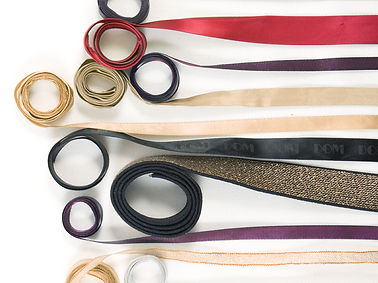
Ribbon (to fix the fabric)
To secure the fabric to the embroidery frame, you will require approximately 10 meters of ribbon. We recommend high-quality cotton or silk with a precise width of 2.5 cm to ensure proper tension.

07
Cotton waxed thread
To begin your embroidery practice, a high-quality thread is essential. While we recommend Sumiko cotton thread (preferably in white), it is not a mandatory requirement. Your chosen thread should simply be waxed and resistant to fraying to ensure smooth execution.
08
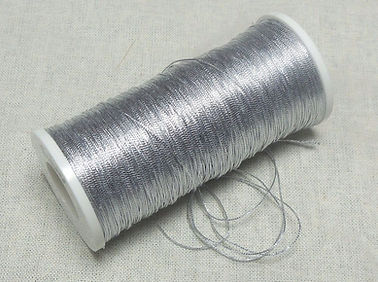
Metal thread
You will also master the art of working with metallic threads. It is essential to source a high-quality bobbin that resists splitting; inferior threads will compromise the precision of your work. We advise against using the Gutermann brand for this particular method.

09
Threaded beads
As we transition into Lunéville techniques, the use of pre-threaded seed beads is essential. Please prepare a few bunches of high-quality beads, specifically sized between 1.2 mm and 1.5 mm, for optimal results.
10
Loose beads
For our Aari embroidery practice, we will work with loose beads in a refined 1.2–1.5 mm size. For superior results and consistency, we highly recommend selecting premium beads from renowned manufacturers such as Toho or Preciosa.


11
Threaded sequins
Mastering the Lunéville technique requires the use of pre-threaded sequins. We recommend sourcing several hanks in sizes ranging from 4 mm to 5 mm to ensure the precision of your work.
12
Loose sequins
As we transition to the Aari method, we will shift to using loose sequins. For optimal results, please source sequins in the 4mm–5mm range. To ensure the highest quality and a superior finish, we recommend choosing French or Italian-made varieties.

Should you have any questions or require professional advice, please feel free to reach out to us at kristina.slauta@gmail.com.
